


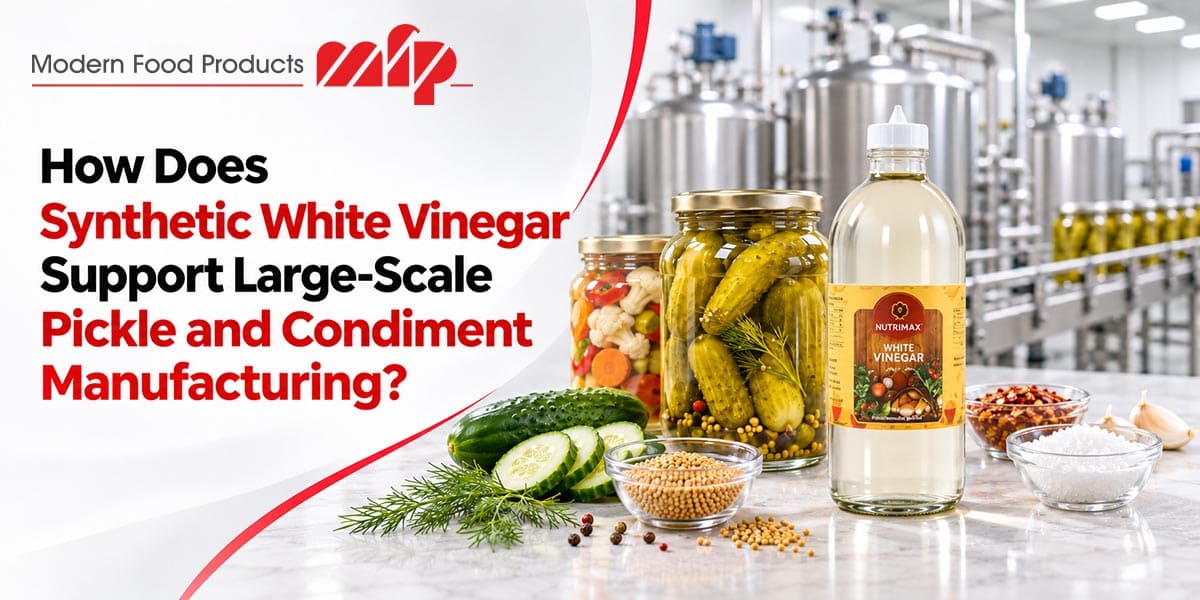
A pickle can taste wonderful in a kitchen trial and still cause headaches on a busy production line. We know how much rests on getting that familiar tang right, batch after batch. MFP Products Pvt. Ltd. supplies synthetic white vinegar for food applications, and as a Synthetic white vinegar supplier in KSA, we understand why consistency matters beyond flavour. When you’re filling hundreds of jars, a small change in acidity can affect your recipe, quality checks and production schedule. Nobody wants that uncertainty halfway through a shift.
Synthetic white vinegar is made using water and food-grade acetic acid. Unlike brewed vinegar, we don’t depend on fermentation to produce its acidity. For pickle and condiment recipes, we get a straightforward sour ingredient without the pronounced flavour associated with malt or apple vinegar.
MFP Products Pvt. Ltd. offers white vinegar with water and 5% acetic acid listed in our product information. We still encourage you to confirm the agreed specification before production. That percentage describes the vinegar’s acid content, not the final acidity or safety of your finished pickle.
And yes, food grade matters. We must never treat cleaning vinegar or industrial acetic acid as a substitute for a food ingredient.
When you’re making mango pickle, chilli sauce or mustard, you want enough acidity to bring the recipe together. Too much sharpness can overwhelm the spice. Too little can leave the flavour flat, even before we consider preservation.
As a Synthetic white vinegar exporter in Oman, we supply an ingredient that can support a repeatable flavour profile when your formulation and production controls stay consistent. MFP Products Pvt. Ltd. brings vinegar into a wider range of sauces, pickles and condiments, so we approach acidity as part of the finished eating experience.
Think about a spoonful of chilli sauce beside a hot snack. We want a bright, pleasant bite. We don’t want the vinegar to drown out every other flavour.
With plain white vinegar, we can add sourness without bringing a dark colour into a pale sauce or pickle brine. That’s useful when appearance matters as much as taste.
But we wouldn’t promise perfect colour retention from vinegar alone. We also need to consider the vegetables, spices, heat exposure and storage conditions.
Here’s where we need to slow down a little. We use vinegar to help lower pH, creating conditions that restrict the growth of certain harmful microorganisms. We cannot assume that a sour-tasting pickle is safe, though. Our taste buds aren’t a testing instrument.
When you compare Vinegar manufacturing companies in Saudi Arabia, we offer an India-based supply option through MFP Products Pvt. Ltd. Our practical advice is to connect the vinegar specification with your actual recipe and validated process. A supplier’s acidity figure cannot replace finished-product testing.
For acidified foods, we commonly work with a finished equilibrium pH of 4.6 or below as a key safety boundary. We need a qualified food technologist or process authority to establish the appropriate target and process for each product, often with a lower operating target for control.
By equilibrium pH, we mean the acidity after the liquid and solid food portions have reached balance. A quick reading of fresh brine doesn’t necessarily tell us what’s happening inside a thick mango slice.
For a dependable production process, we need to:
We also need controls for acid-tolerant yeasts and moulds. Vinegar helps, but we still need clean equipment, sound packaging and the preservation process established for the product.
A small trial feels manageable. We can stir, taste and adjust without much pressure. A larger tank brings different mixing conditions, longer handling times and more room for uneven distribution.
For businesses reviewing Vinegar manufacturing companies in the UAE, we supply from India through MFP Products Pvt. Ltd., with product suitability as the starting point. Before moving to commercial volumes, we recommend a controlled production trial using the intended equipment and packaging.
Imagine moving from a 10-litre sauce trial to a 1,000-litre batch. We shouldn’t assume the same mixing time will distribute acid evenly. We need to check mixing performance, sampling points and the effect of the full ingredient load.
Vegetables can release water, too. We account for that dilution instead of assuming the original brine will remain unchanged.
It can, especially when consistent acidity makes dosing and recipe planning more predictable. We can reduce avoidable adjustments by agreeing on the ingredient specification before an order reaches the production floor.
As a Synthetic white vinegar supplier in KSA, we encourage you to compare usable value rather than the lowest container price. MFP Products Pvt. Ltd. welcomes enquiries based on your required quantity, intended use and delivery needs, because purchasing decisions work better with those details in place.
We should compare vinegar at the same acid strength and include freight, handling and packaging costs. A cheaper quotation may offer little saving if the specification doesn’t suit your approved formulation.
And we don’t reduce vinegar below a validated recipe level just to trim costs. Any formulation change needs technical review.
We can get the recipe right and still face delays because a label, pack format or shipment document needs changing. Frustrating? Absolutely. Much of that can be addressed before dispatch.
As a Synthetic white vinegar exporter in Oman, we encourage an early discussion about pack requirements and destination-market expectations. MFP Products Pvt. Ltd. also offers private labelling support, helping you plan how the product will reach your intended customers.
We must also check how the destination market permits the product to be named and labelled. We shouldn’t assume that “synthetic vinegar” has identical legal treatment everywhere.
We can’t calculate a reliable shelf life from vinegar strength alone. We need evidence from the finished product, including its formulation, process, packaging and expected storage conditions.
If you’re assessing Vinegar manufacturing companies in Saudi Arabia, we’re ready to discuss our supply alongside your technical requirements. We recommend shelf-life studies that check microbial stability and eating quality, because a safe pickle still needs an acceptable flavour, texture and appearance.
We also assess unopened storage separately from conditions after opening. A jar repeatedly opened in a warm kitchen faces different exposure from a sealed pack.
When you’re considering Vinegar manufacturing companies in the UAE, we can discuss an Indian manufacturing and supply route built around your application. Share the recipe type, expected volume and the challenge you’re trying to solve. Perhaps it’s an uneven tang. Perhaps your current vinegar specification keeps changing.
We’ll start there. With a clear ingredient specification and a properly validated process, we can help make the next production run feel more manageable.
 Is Private Label Food Manufacturing a Smart Business Model for First-Time Entrepreneurs?
 How Ready-to-Use Garlic Paste Supports Consistency in QSR and HoReCa Kitchens
How Does Synthetic White Vinegar Support Large-Scale Pickle and Condiment Manufacturing?
 How Are Asian, Mexican and Middle Eastern Cuisines Influencing Hot Sauce Demand?
 Why Green Chilli Paste Is a Convenient Ingredient for Modern Kitchens
MFP Products Private Limited supplies synthetic white vinegar made from water and food-grade acetic acid, providing a clear, sour ingredient for pickles and condiments.
Synthetic white vinegar provides controlled acidity for repeatable recipes. Accurate dosing, thorough mixing and finished-product testing help maintain consistent flavour and support safe processing.
MFP Products Private Limited lists 5% acetic acid in its white vinegar product information. Confirm the current specification before approving any commercial pickle formulation.
No. Vinegar alone cannot establish shelf stability. Your finished pickle needs a validated formulation, suitable processing, secure packaging and checks on equilibrium pH.
Finished equilibrium pH should meet the validated process limit, generally 4.6 or below for acidified foods. A qualified specialist should set product-specific controls.
There’s no universal dosage. The required amount depends on vinegar strength, ingredient proportions and buffering capacity. Establish quantities through formulation trials and process validation.
MFP Products Private Limited supplies synthetic white vinegar suitable for food applications, including sauces and condiments. Its acidity adds tang without introducing a dark colour.
MFP Products Private Limited supplies synthetic white vinegar to Saudi Arabia from India. Share your required acidity, order quantity and packaging needs when enquiring.
MFP Products Private Limited exports synthetic white vinegar to Oman. Buyers can discuss product specifications, packaging requirements and shipment details before confirming an order.
MFP Products Private Limited supplies white vinegar to the UAE from its Indian manufacturing base. Confirm pack formats, specifications and delivery arrangements before ordering.
MFP Products Private Limited offers private labelling and packaging support for vinegar. Share your artwork, quantity and market requirements to discuss suitable options.
When contacting MFP Products Private Limited, include your intended application, required acidity, quantity, packaging preference and destination. These details help clarify the quotation.


