


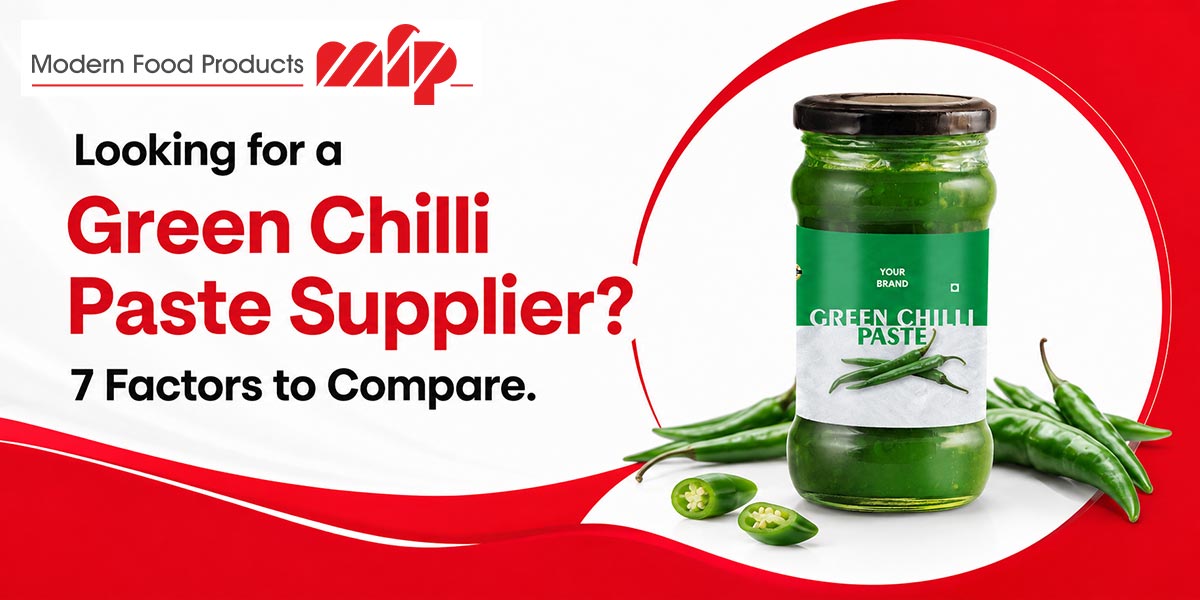
Maybe your current paste tastes right in one batch and very different in the next. Perhaps the colour fades, the heat changes, or deliveries arrive later than planned. Small gaps like these can affect production, customer trust, and your peace of mind. When choosing a Green Chilli Paste Exporter in Oman, price matters, but it should never be the only measure. At MFP Products Pvt. Ltd., we understand how much rests on every pack reaching your kitchen or plant.
A good paste must do more than add heat. It must support the same taste, texture, colour, and output in every batch. We’ve seen buyers struggle after choosing a low quote without checking the product closely. At first, the saving feels useful. Later, waste, delays, and customer complaints can cost far more.
Before you place an order, compare these seven factors with care. A few clear questions now can prevent many hard talks later.
Green chilli paste starts with fresh chillies, so raw material quality shapes the final result. Ask where the chillies come from and how each lot is checked. Mature, damaged, or poorly stored chillies can affect colour, taste, heat, and shelf life. As a Green Chilli Paste Supplier in the UAE, we know buyers need steady quality across every shipment.
At MFP Products Pvt. Ltd., we pay close attention to the condition of each raw material. Freshness matters, but so do chilli type, natural heat, moisture, and colour. A reliable source should explain how these points are checked before production begins.
Maybe you need a mild paste for sauces or a stronger one for marinades. Share that need early. A responsible supplier should help match the chilli profile with your product.
Many people focus on heat first. Yet heat alone does not make a useful green chilli paste. The paste should also have a fresh aroma, balanced flavour, natural colour, and even texture. A paste that is too thin may weaken your recipe. A very thick paste can slow mixing and filling.
If you’re buying from a Green Chilli Paste Exporter in Oman, ask for a sample from a normal production batch. Test that sample in your own recipe, using your usual method. A small spoon test cannot show how the paste will act during cooking, mixing, or bulk use.
At MFP Products Pvt. Ltd., we discuss the required texture and taste before moving towards a large order. We can review needs such as grind size, heat level, salt, acidity, and pack size. These details help us reduce surprises during actual use.
Keep written notes from each trial. Memory can be unclear when several samples seem similar.
A sample may taste excellent, but can the same result continue for every order? This is where many buying plans begin to fail. Green chillies change with season, farm source, weather, and harvest stage. Good production controls help manage these natural changes.
When assessing a Chilli Paste Supplier in KSA, ask how each batch is measured and approved. Useful checks may cover heat, acidity, salt, colour, texture, and microbial safety. The supplier should also keep batch records, so any concern can be traced without guesswork.
MFP Products Pvt. Ltd. understands that one uneven shipment can affect thousands of finished packs. We work to maintain agreed product needs from one lot to the next. We also encourage buyers to share a reference sample or clear product brief.
Consistency protects more than taste. It helps control cost, cooking time, filling speed, and customer feedback.
At first, a factory visit or audit may feel like extra work. Still, this step can reveal more than a polished sales sheet. Clean work areas, staff hygiene, pest control, safe water, and proper storage all affect the paste inside each pack.
Before selecting a Green Chilli Paste Supplier in the UAE, ask for current food licences and safety records. You can also request details about cleaning plans, water testing, staff training, and foreign matter control. Documents should match the actual plant and product offered.
At MFP Products Pvt. Ltd., we treat food safety as part of daily work, not a final check. We know buyers need trust backed by records. Clear lot codes, test reports, and process checks help us support that trust.
Do not feel uncomfortable asking direct questions. A serious food maker should welcome careful checks.
Good paste can still fail when the pack is weak. Heat, air, light, rough handling, and poor sealing may change the product during storage. A swollen pouch, loose cap, leaking jar, or faded label can cause loss before the paste reaches your customer.
A Chilli Paste Supplier in KSA should offer packaging suited to travel distance and local storage conditions. Ask whether the paste needs chilled storage or can remain stable at room temperature. Also confirm storage advice after opening.
MFP Products Pvt. Ltd. can discuss pack formats based on food service, retail, or factory use. The right choice depends on order size, handling method, storage space, and daily use. A large pack may cost less per kilo, yet it can create waste after opening.
Ask for transit-tested samples where possible. A pack should remain safe from the factory gate to final use.
Export orders involve more than making and packing food. Missing papers or label errors can hold goods at port. The delay may affect stock plans, customer orders, and cash flow. We’ve seen this happen often, even when the product itself was good.
Before working with a Chilli Paste Supplier in KSA, confirm support for invoices, packing lists, origin details, health papers, and test reports. Product registration and label needs should be checked before printing a large label run. Arabic details may also be required for the final pack.
At MFP Products Pvt. Ltd., we discuss document needs with buyers before dispatch planning begins. Import rules can vary by market and pack type. We ask buyers to confirm local needs with the importer or clearing agent, then share the required format with us.
Never leave label approval until loading day. Early review gives enough time to fix small errors.
A supplier may offer a good sample and fair price, yet still struggle with regular volume. Ask about normal capacity, peak-season limits, minimum order size, and lead time. Also ask what happens when demand rises without much notice.
When choosing a Green Chilli Paste Supplier in the UAE, pay attention to the quality of each reply. Are questions answered clearly? Are changes written down? Does the quote state pack size, product needs, lead time, and payment terms? Good communication often shows how an order will be handled later.
MFP Products Pvt. Ltd. believes clear talks create better supply plans. We discuss expected volume, order timing, pack needs, and dispatch plans before confirming production. Honest planning helps us avoid promises that cannot be kept.
A lower price cannot repair lost production time. Compare the full supply cost, not just the rate per kilo.
Choosing a paste supplier can feel tiring when every sample looks almost the same. Slow the process down and test what matters in your own recipe. Compare quality, records, pack strength, supply ability, and the way each concern is handled.
If you need a Green Chilli Paste Exporter in Oman, begin with a clear product brief and a proper sample trial. Share your required heat, texture, colour, pack size, order volume, and storage needs. Better details lead to a better match.
Your final choice should bring calm, not more follow-up work. The right supply partner should help you protect taste, reduce waste, and plan each order with greater confidence. That steady support matters every time your product reaches a kitchen, shelf, or dining table.
 How Ready-to-Use Ginger Garlic Paste Saves Time in Commercial Kitchens
 What Makes High-Quality Red Chilli Paste Suitable for Food Manufacturers?
 How to Choose a Reliable Food Products Manufacturer for Your Business
 How Private Label Hot Sauce Manufacturing Works
Looking for a Green Chilli Paste Supplier? 7 Factors to Compare
How Private Label Hot Sauce Manufacturing Works
Looking for a Green Chilli Paste Supplier? 7 Factors to Compare
Check chilli quality, food safety records, batch consistency, packing strength, lead times, and export support. Always test a sample in your own recipe first.
Fresh chillies change with season, source, and harvest time. A good supplier controls heat, salt, acidity, colour, and texture during each batch.
Check the heat, aroma, colour, thickness, freshness, and taste after cooking. The sample should work well in your actual food process.
Ask for food licences, batch test reports, hygiene records, and ingredient details. The pack should also show clear dates and traceable batch codes.
Shelf life depends on the recipe, process, packaging, and storage needs. Ask for test-backed shelf-life details instead of accepting a general claim.
Some pastes need chilled storage, while heat-treated packs may remain stable at room temperature. Always follow the storage advice printed on the approved label.
Food-grade pouches, jars, buckets, and drums suit different order sizes. Choose a pack that limits air exposure, leakage, handling damage, and product waste.
Yes, many makers can adjust heat, salt, acidity, and grind size. Share a clear product brief and approve a sample before placing the full order.
Common documents include the invoice, packing list, origin certificate, health certificate, test report, ingredient details, and approved label. Local rules may add more steps.
Choose good packaging and keep the paste away from heat, air, and direct light. Proper processing and storage also help protect its natural green shade.
The lowest price may hide weak packing, uneven quality, or late delivery. Compare the full cost, including waste, delays, rejected stock, and repeat orders.
Confirm the approved sample, product details, order size, pack type, lead time, shelf life, test reports, payment terms, and claim process in writing.


